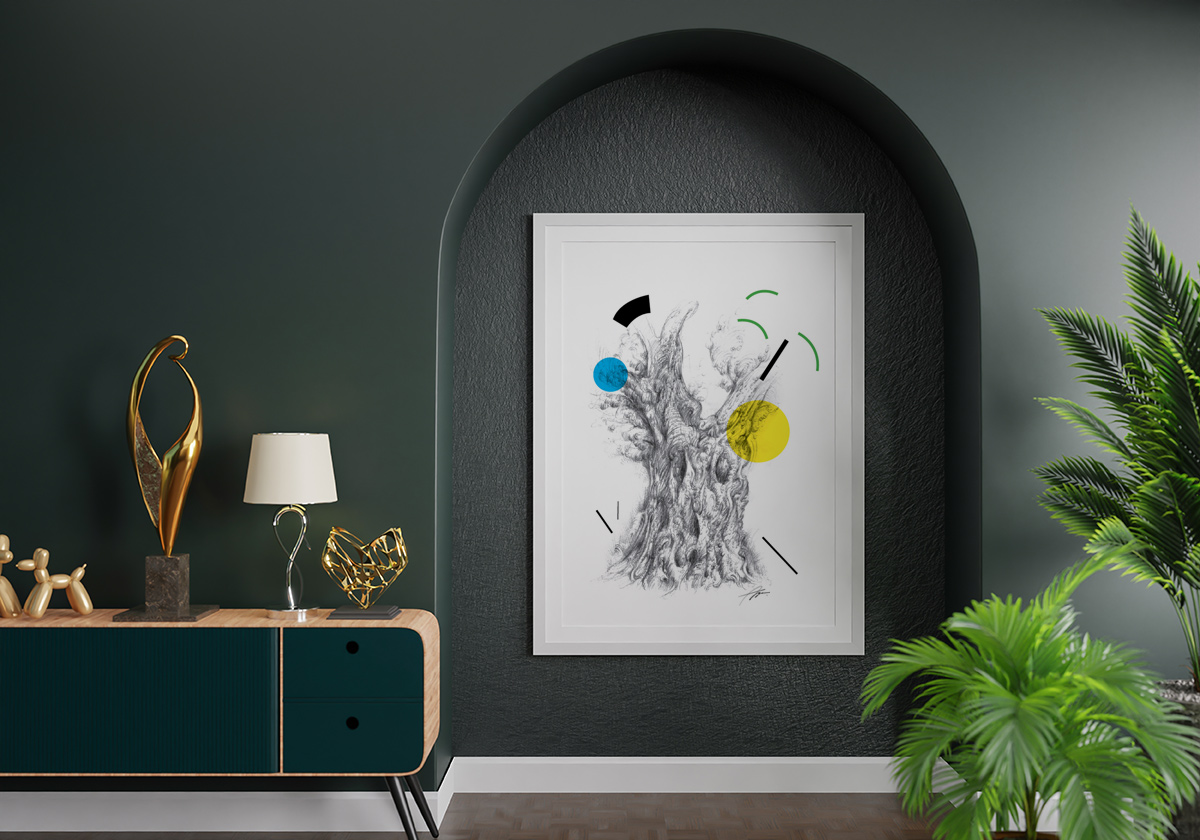
Image: Mockup – a modern hotel interior with modern wildlife art of an olive tree by Aga Grandowicz (see more here). Interior image by Vecteezy.
Hotels are no longer judged solely by bed comfort or service efficiency. Guests remember atmosphere. They remember the character of a lobby, the unexpected detail in a corridor, the image above a bed, or the sense that a place possesses an identity rather than merely a decorative scheme.
This is where wildlife art can play a particularly compelling role.
Animals, birds, plants and landscapes carry an immediate emotional charge. A finely observed drawing of a bird can introduce delicacy and curiosity into a contemporary interior. A monumental mural can anchor an entire public space. Botanical and wildlife imagery can refer to the landscape surrounding a property, its history, or the species that inhabit the region. Even a relatively restrained black-and-white artwork can give a polished hotel interior a stronger sense of place.
For hotels, resorts, lodges and boutique accommodation, wildlife art offers considerably more than ornament. It can become part of the property's visual language.
Why Wildlife Art Works So Well in Hotel Interiors
Hospitality design is, at its heart, an exercise in shaping experience. Every material, object, and visual cue shapes how guests perceive a space. Artwork is particularly powerful because it can communicate something beyond function. It introduces narrative.
Wildlife imagery is remarkably versatile in this respect. It may suggest wilderness, tranquillity, exploration, local heritage or environmental awareness. A hotel beside the sea might draw on marine life and coastal birds. A rural retreat could commission artwork inspired by native mammals, woodland species or the plants growing nearby. In an urban hotel, wildlife art can provide an intriguing counterpoint to the surrounding architecture, bringing organic forms into a more structured environment.
The result need not be rustic.
Wildlife art is sometimes associated with traditional country-house interiors, framed paintings of game birds or conventional natural history imagery. Yet contemporary wildlife art can be graphic, minimal, expressive, monochrome or boldly abstract. It can sit comfortably within an elegant modern hotel just as readily as within a lodge surrounded by mountains. The subject is nature. The treatment can be almost anything.
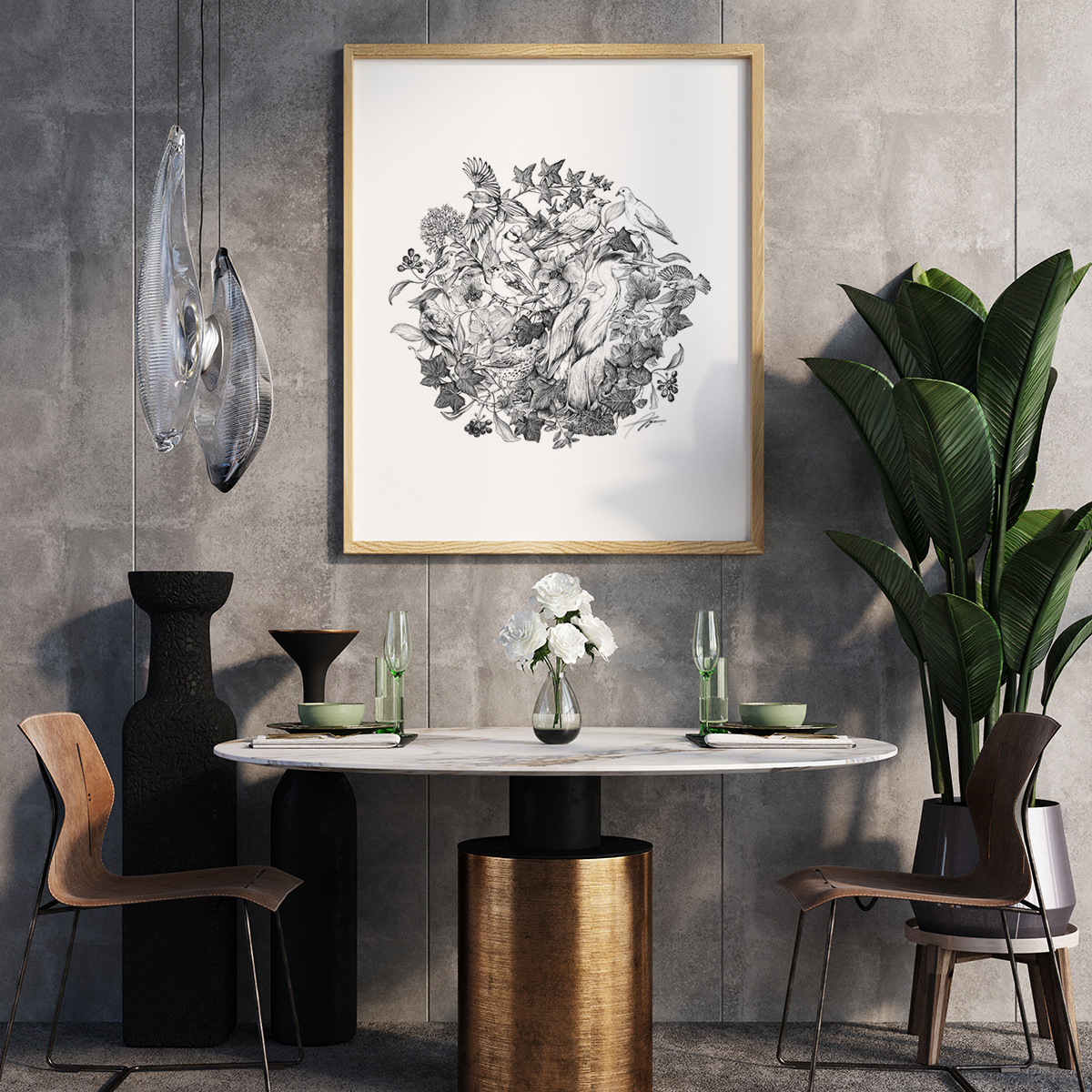
Image: A modern hotel dining area with a black and white pen wildlife art of birds and plants by Aga Grandowicz (see more here). Interior image by Vecteezy.
Choosing Wildlife Art for a Hotel
There is no universal formula for selecting artwork, but several considerations can help ensure that the finished scheme feels intentional rather than incidental.
Theme, Identity and Atmosphere
The strongest hotel interiors have a recognisable character. Before choosing wildlife artwork, it is worth considering what the property wishes to communicate.
Is the hotel closely connected to a particular landscape? Does the building have a historical story? Is sustainability central to the brand? Perhaps the interior is calm and pared back, or theatrical and exuberant.
Artwork should converse with these qualities.
A contemporary property with clean architectural lines may suit detailed pen drawings, restrained monochrome prints or large-scale graphic imagery. A hotel in a Mediterranean setting could incorporate artwork inspired by olive trees, native birds or the local ecology. A countryside hotel might commission a series based on species found within the surrounding landscape, creating a visual thread between indoors and out.
When the artwork grows from the identity of the place, it acquires greater resonance.
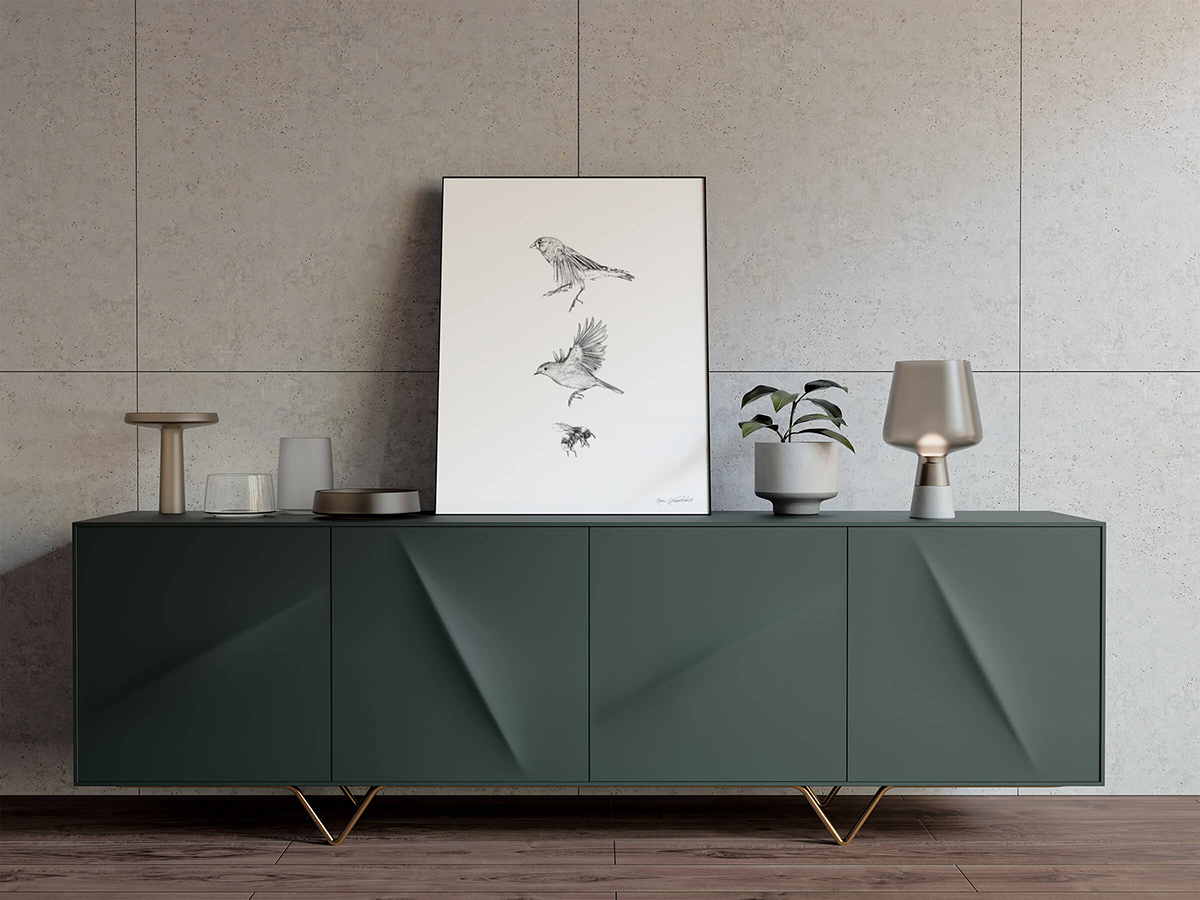
Image: A modern hotel dining area with 'Finch, robin and a bumblebee' – a black and white pen drawing by Aga-Grandowicz (see more here).
Scale and Placement
Scale can completely change an artwork's effect.
A large piece in a reception area may become an immediate focal point, something guests remember and associate with the hotel. In contrast, a carefully chosen collection of smaller works can reward closer inspection in corridors, stairwells or guest rooms.
Public spaces often allow for greater visual ambition. A mural behind a reception desk, a substantial wildlife painting in a lobby or an illustrated wall in a restaurant can establish a strong first impression. Private spaces generally benefit from a quieter approach, although this depends entirely on the interior concept.
Placement matters as much as size. Art should not simply occupy an empty wall. It can direct attention, punctuate a long corridor, soften a transition between spaces or create a moment of visual pause.
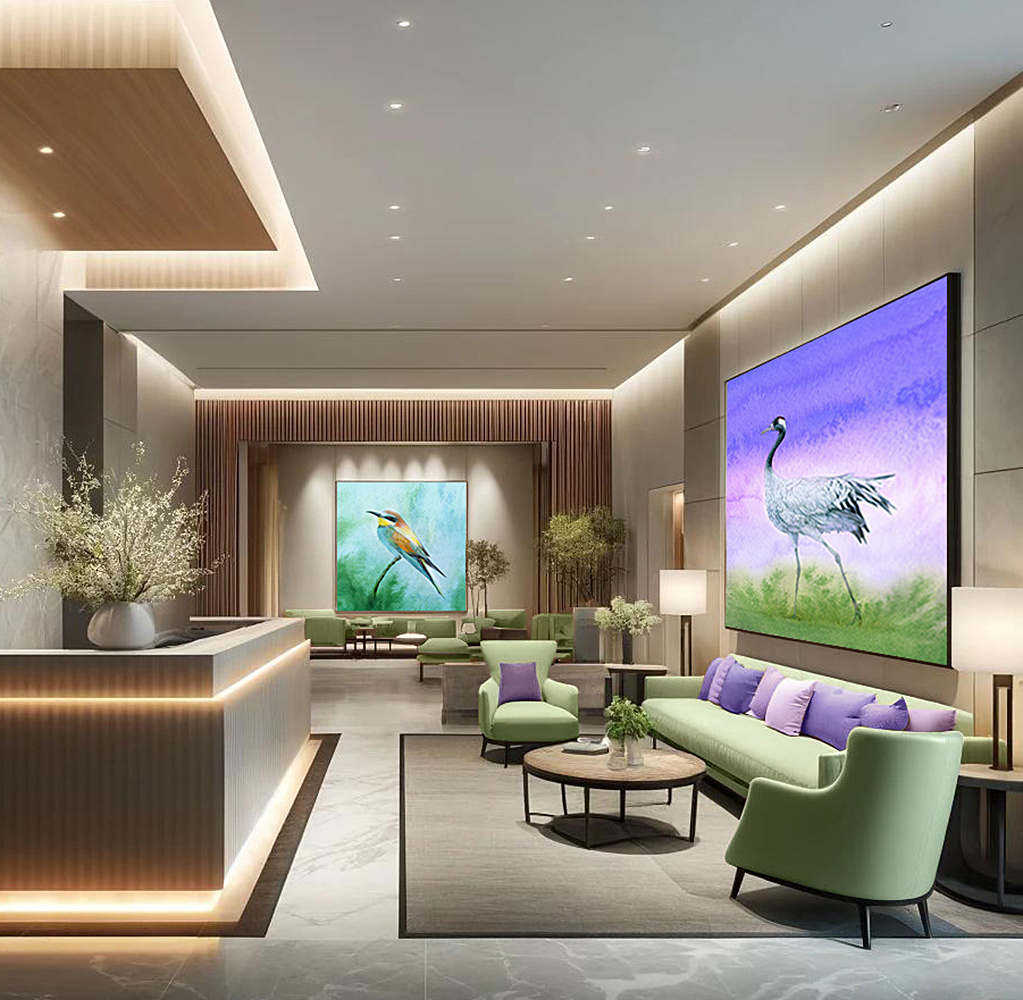
Image: A modern hotel's reception area with bird paintings by Aga Grandowicz.
Materials and Artistic Medium
The choice of medium also affects the mood.
A watercolour may bring softness and luminosity. Pen-and-ink drawings can appear intricate, graphic and contemporary. Coloured pencil offers detail and a distinctive tactile quality, while murals can transform architecture itself into part of the artwork.
Digital artwork and fine art prints can provide flexibility, particularly when several rooms require a coordinated visual scheme. Original works and commissions, meanwhile, offer a greater degree of exclusivity and can become an important part of a hotel's identity.
The practical environment should also be considered. Hospitality interiors see heavy use, so framing, surface protection, lighting, and material durability deserve careful thought.
The Benefits of Wildlife Art in Hotel Décor
A More Distinctive Visual Identity
A well-designed hotel should not feel interchangeable.
Wildlife art can give interiors an unmistakable character, particularly when the imagery is commissioned specifically for the property. Rather than relying on anonymous decorative prints selected from a catalogue, a hotel can develop an art programme with its own visual vocabulary.
A series of birds, for example, could appear in guest rooms, public areas and printed materials. Native plants might inform murals, signage or smaller decorative details. A recurring motif can create coherence without making every room identical.
This is especially valuable for independent and boutique hotels seeking a recognisable identity in a crowded market.
A Connection with the Natural World
Many people spend their days surrounded by screens, traffic and built environments. Nature imagery offers a visual counterbalance.
A drawing of a bird perched among branches, a study of an ancient tree or an artwork depicting plants and insects can introduce a sense of the living world into an interior without resorting to clichés. The effect can be subtle. Guests don't need to stay in a forest lodge to appreciate imagery that recalls the natural world.
For hotels with strong environmental credentials, wildlife art can also reinforce a broader commitment to biodiversity and conservation. It can help tell a location's story and draw attention to species that might otherwise go unnoticed.
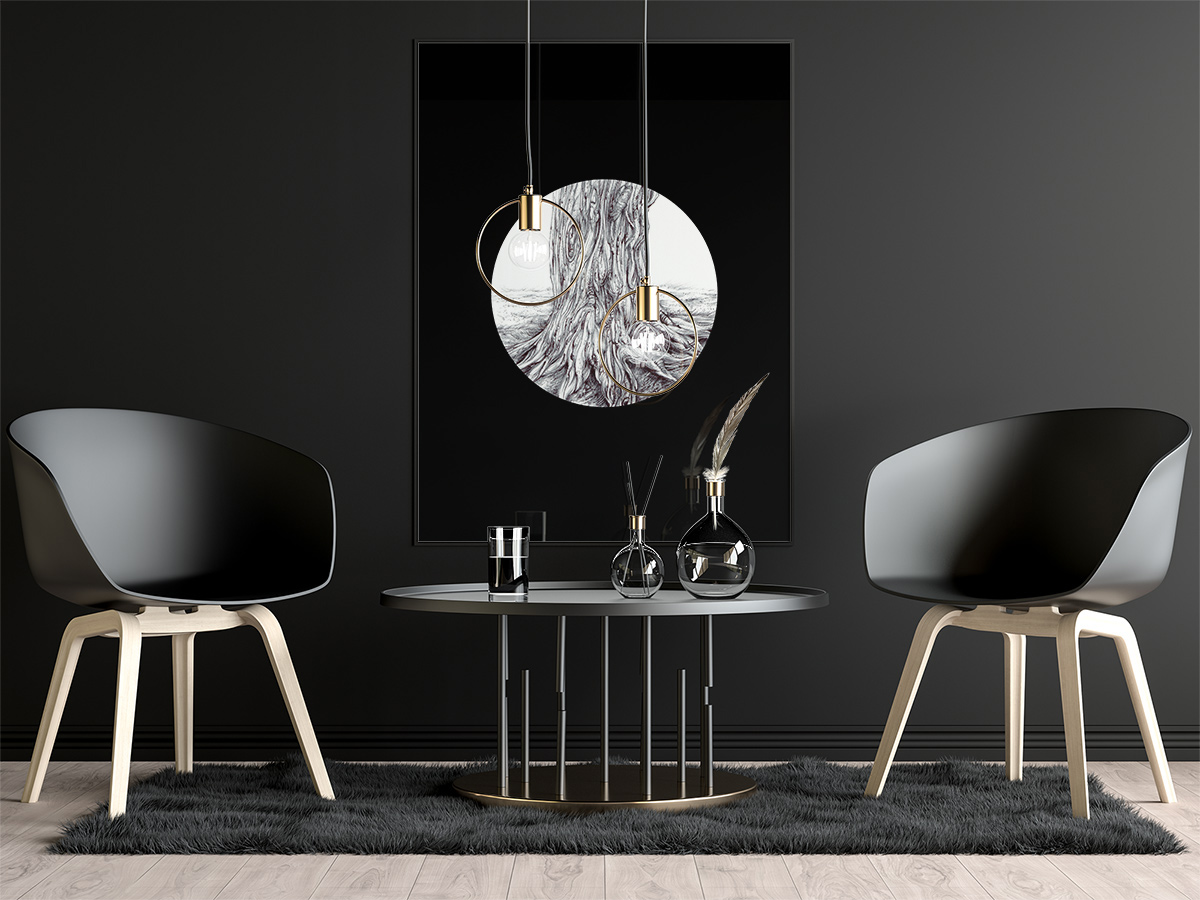
Image: A modern sitting area of a hotel with black and white pen wildlife art of an old tree by Aga Grandowicz (see more here).
Spaces That Feel More Considered
Art changes a room's emotional temperature.
A reception area furnished with excellent materials can still feel impersonal if nothing gives it a particular voice. Artwork introduces another layer. It can be contemplative, energetic, curious or quietly humorous. It gives guests something to look at while they wait, something to discuss over dinner, something they may photograph and share.
The most successful pieces do not necessarily shout for attention. Sometimes their value lies in repeated encounters. A guest notices one detail on arrival and another two days later.
Wildlife Art as Part of the Guest Experience
Images That Stir Curiosity
Animals are among the most immediately engaging subjects in art. We recognise them, project stories onto them and often want to know more about them.
An artwork depicting a species unfamiliar to a guest can prompt a question. Is that bird found locally? Does that animal live nearby? Why is that particular plant included?
For a hotel, this presents an opportunity to connect art with interpretation. Discreet captions, illustrated species guides or information incorporated into a digital guest guide can add another dimension to the experience.
A Natural Conversation Starter
Art can perform a useful social function in shared spaces.
A striking wildlife mural may become a meeting point. A collection of drawings in a restaurant can encourage conversation. An exhibition of work by a local wildlife artist can attract visitors beyond the hotel's usual clientele.
Unlike generic décor, original art gives people something specific to talk about.
A Point of Difference
Competition within hospitality is fierce. Hotels compete on location, price, food, service and facilities, but also on atmosphere and memorability.
Bespoke art can become part of that distinction.
Guests may not remember every piece of furniture in a room, but they may remember the enormous swallow painted across a wall, the series of native birds outside the restaurant, or the intricate drawings that appeared throughout the building.
These details suggest the hotel was designed with care.
What Types of Wildlife Art Suit Hotels?
The possibilities go far beyond framed paintings.
Paintings
Original paintings can bring richness and individuality to reception areas, suites, restaurants and lounges. Depending on the artist's approach, they may be highly detailed, loose and expressive, graphic or almost abstract.
A single large work can carry a space. A smaller series can create rhythm across several walls.
Drawings
Detailed wildlife drawings work particularly well in contemporary interiors. Pen, coloured pencil and other drawing media can produce work that rewards close viewing while remaining visually restrained from a distance.
Black-and-white drawings, in particular, can integrate easily with a wide range of interior palettes.
Murals
Murals offer perhaps the greatest opportunity for transformation.
A blank wall can become a woodland canopy, an illustrated wetland, a gathering of birds or an imaginative interpretation of a local ecosystem. Murals can be monumental, but they do not have to overwhelm a room. A restrained line drawing extending across a wall may be equally effective.
They are particularly suitable for reception spaces, restaurants, bars, stairwells and corridors where a hotel wants to create a strong visual signature.
Fine Art Prints
Fine art prints can be an excellent solution where several rooms require artwork of consistent quality. They allow a hotel to develop a coherent collection while varying the individual pieces from room to room.
Limited editions can also provide a greater sense of rarity than standard decorative reproductions.
Digital and Mixed-Media Work
Digital methods expand the possibilities further. Artwork can be created specifically for large-format printing, wallcoverings, glass applications or other architectural surfaces.
Mixed-media approaches can introduce unexpected textures and combinations of traditional drawing with contemporary design.
Where to Display Wildlife Art in a Hotel
Lobby and Reception
The arrival experience sets expectations.
A carefully selected artwork in the lobby can establish the hotel's visual identity before a guest has even checked in. Large-scale work is particularly effective here, although a carefully curated collection can create a more gallery-like atmosphere.
For properties with a strong local connection, this is an ideal place to introduce species, landscapes or natural motifs associated with the region.
Guest Rooms and Suites
Artwork in bedrooms should contribute to the atmosphere without becoming intrusive.
Smaller original works or fine art prints can add personality and prevent rooms from feeling generic. A hotel might create several related collections, allowing different rooms to feature different species while maintaining an overall aesthetic connection.
This can also encourage repeat guests to encounter something new on each visit.
Restaurants and Dining Areas
Restaurants provide excellent opportunities for wildlife art because guests spend time looking around while eating and talking.
Botanical studies, birds, insects, marine life or other imagery connected with the location or menu can create a subtle narrative. A contemporary restaurant might use bold, graphic work, while a quieter dining room may suit intricate drawings that reward close attention.
Art can shape the ambience without competing with it.
Corridors and Transitional Spaces
These areas are often overlooked, yet they can become some of the most interesting parts of a hotel.
A sequence of related artworks can turn a long corridor into a visual journey. A progression of species, seasonal changes or illustrations inspired by a local habitat can provide continuity from one space to another.
Outdoor and Semi-Outdoor Areas
Wildlife imagery need not remain indoors.
Murals, weather-resistant panels and carefully chosen artworks can also enhance terraces, courtyards, garden rooms and covered walkways. Here, the relationship between the artwork and the real landscape can become especially interesting.
Working with a Wildlife Artist
For hotel owners and interior designers, commissioning artwork offers advantages that ready-made décor cannot match.
A bespoke commission can respond to the architecture, colour palette, scale and intended atmosphere of a particular space. It can incorporate species associated with the local area, reference the building's history, or form part of a wider interior concept.
Working directly with a wildlife artist also allows the project to develop beyond conventional framed artwork.
Depending on the brief, a commission might include:
- Original paintings or drawings
- Fine art print collections for guest rooms
- Large-scale murals
- Artwork for reception and public spaces
- Interpretative illustrations about local wildlife
- Illustrated signage and wayfinding
- Decorative panels or wall graphics
- Artwork connected with a hotel's biodiversity or sustainability initiatives
- Temporary exhibitions and artist events
For hotels situated near important natural landscapes, there is also potential to create interpretative artwork that informs as well as decorates. Illustrated signs about local birds, plants or habitats can be incorporated into gardens, walking routes or outdoor guest areas. A wildlife artist can therefore contribute to both the aesthetic and educational dimensions of a property.
Hosting Exhibitions and Art Events
Hotels can also use their spaces to support artists and engage with local communities.
A wildlife art exhibition, artist talk or temporary display can create an additional reason for people to visit. For properties with suitable public areas, these events may complement existing cultural or environmental programmes and strengthen relationships with local audiences.
An exhibition can also be refreshed periodically, ensuring that the hotel's visual environment continues to evolve.
Wildlife Art Can Turn Decoration into Storytelling
The most interesting hotel interiors do more than look attractive. They create a sense of narrative.
Wildlife art offers an unusually rich vocabulary for this purpose. It can reflect a region's ecology, introduce guests to overlooked species, create moments of beauty and curiosity, or simply give a space greater individuality.
The approach need not be literal. A contemporary drawing of birds can feel elegant and architectural. An old tree can become a dramatic graphic motif. An olive grove can bring a quiet, sculptural presence to a modern room.
What matters is the relationship between the artwork and the place.
When chosen thoughtfully, wildlife art can become part of a hotel's identity rather than an afterthought on the wall. It can make public spaces more distinctive, guest rooms more personal, and the overall experience more memorable.
As a wildlife artist, I create artwork ranging from detailed drawings and fine art prints to bespoke commissions. I can work with hotel owners and interior designers to develop artwork suited to a particular property, whether that means selecting existing pieces, commissioning something entirely new, creating a mural or developing interpretative illustrations inspired by local wildlife.
To discuss which wildlife artwork might suit your hotel or interior project, please get in touch via my contact page.
Frequently Asked Questions About Wildlife Art for Hotels
What is the best way to use wildlife art in a small hotel space?
Scale is particularly important in compact interiors. One carefully selected piece can have more impact than several unrelated artworks. Detailed drawings and fine art prints often work well because they can introduce character without making a room feel visually congested. A small series of related works can also create continuity through corridors or guest rooms.
Is wildlife art suitable for eco-friendly hotels?
Yes. Wildlife art can complement a hotel's environmental ethos, particularly when the artwork reflects local biodiversity, habitats or conservation themes. It can also form part of a broader interpretative approach, helping guests learn more about the natural environment surrounding the property.
How can wildlife art appeal to an international range of guests?
Rather than attempting to appeal to everyone through generic imagery, it is usually more effective to choose work with a strong sense of character. Animals and the natural world have broad emotional appeal, while original artwork gives guests something distinctive to encounter. Local species can be particularly interesting because they connect visitors to the place they are visiting.
Is commissioning wildlife art worthwhile for a hotel?
A bespoke commission can provide something that competing properties cannot simply replicate. The artwork can be created around the architecture, brand and location of the hotel, becoming part of its visual identity. Its value lies not only in decoration but in differentiation, storytelling, and creating a more memorable guest experience.
Can a wildlife artist create more than artwork for hotel walls?
Absolutely. Depending on the project, wildlife illustration can be adapted for murals, interpretative signs, wayfinding, decorative panels, printed materials, biodiversity projects and other visual applications. This makes it possible to develop a coherent visual language across several areas of a hotel or resort.