I’m particularly drawn to projects with a purpose, where illustration and design are used not simply to make something visually appealing, but to communicate, educate and encourage people to engage with the natural world.
The GALLANES LOUGH AMPHIBIAN HABITATS ENHANCEMENT PROJECT is a good example of this approach. Completed in early 2025, the project involved creating two illustrated information boards for a local amphibian habitat restoration initiative in County Cork.
The boards were developed as part of the County Cork Biodiversity Action Plan, funded by Cork County Council and the NPWS through the Local Biodiversity Action Fund, in collaboration with The Herpetological Society of Ireland.
Making amphibian conservation accessible
The project focuses on improving amphibian habitat at Gallanes Lough, while also helping local people understand why these habitats matter.
My role was to translate the project's scientific and conservation information into clear, engaging visual communication. Rather than relying solely on blocks of explanatory text, I used wildlife illustration, diagrams and graphic design to make the information easier to understand and more inviting to explore.
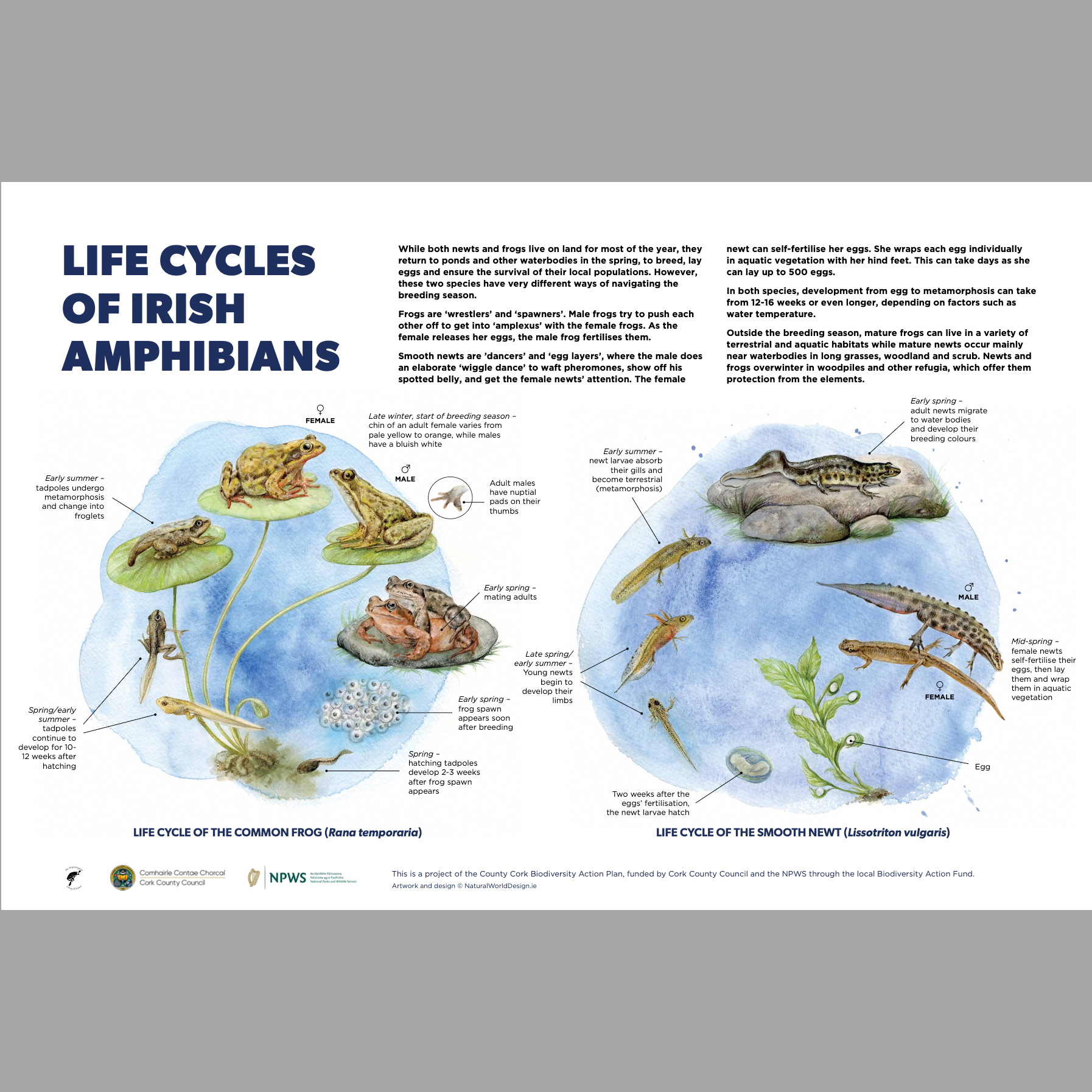
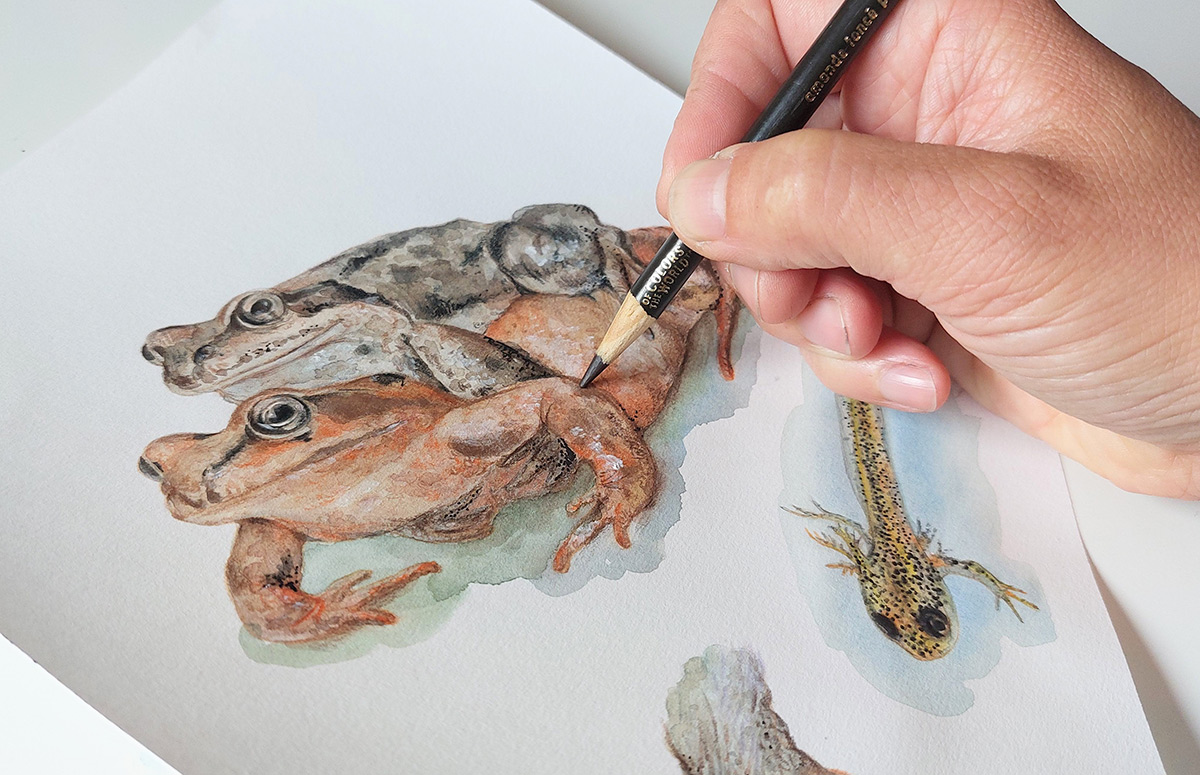
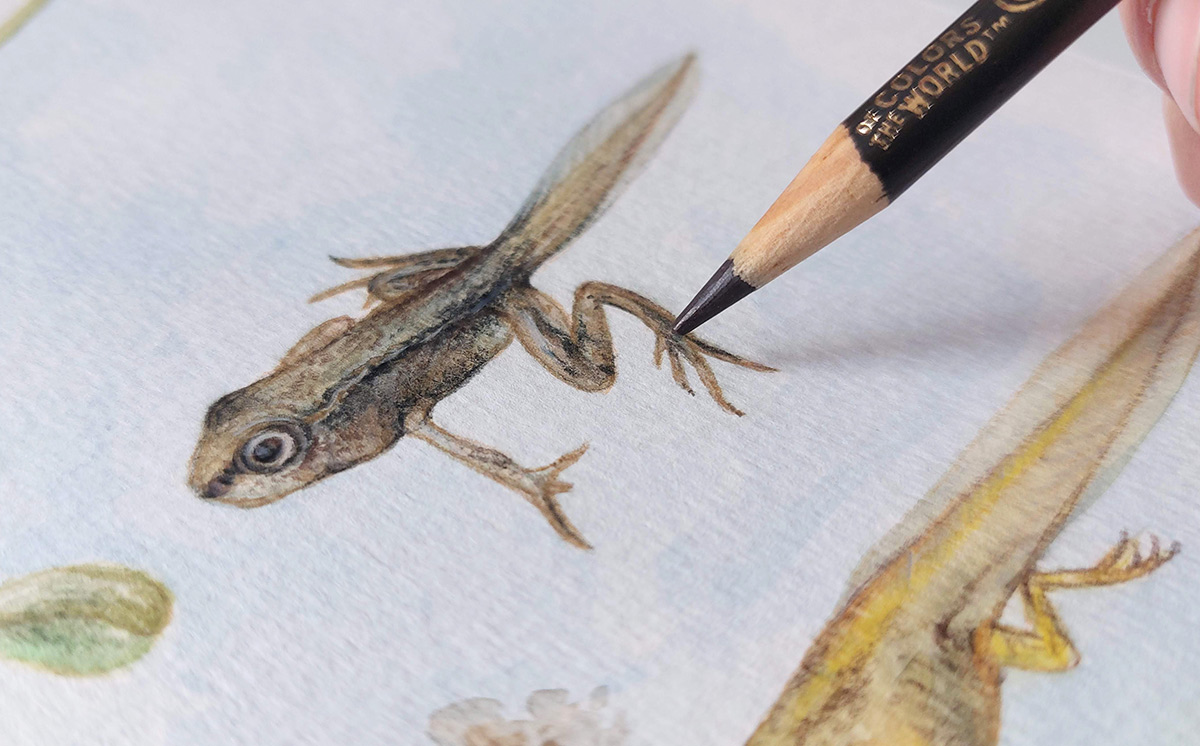
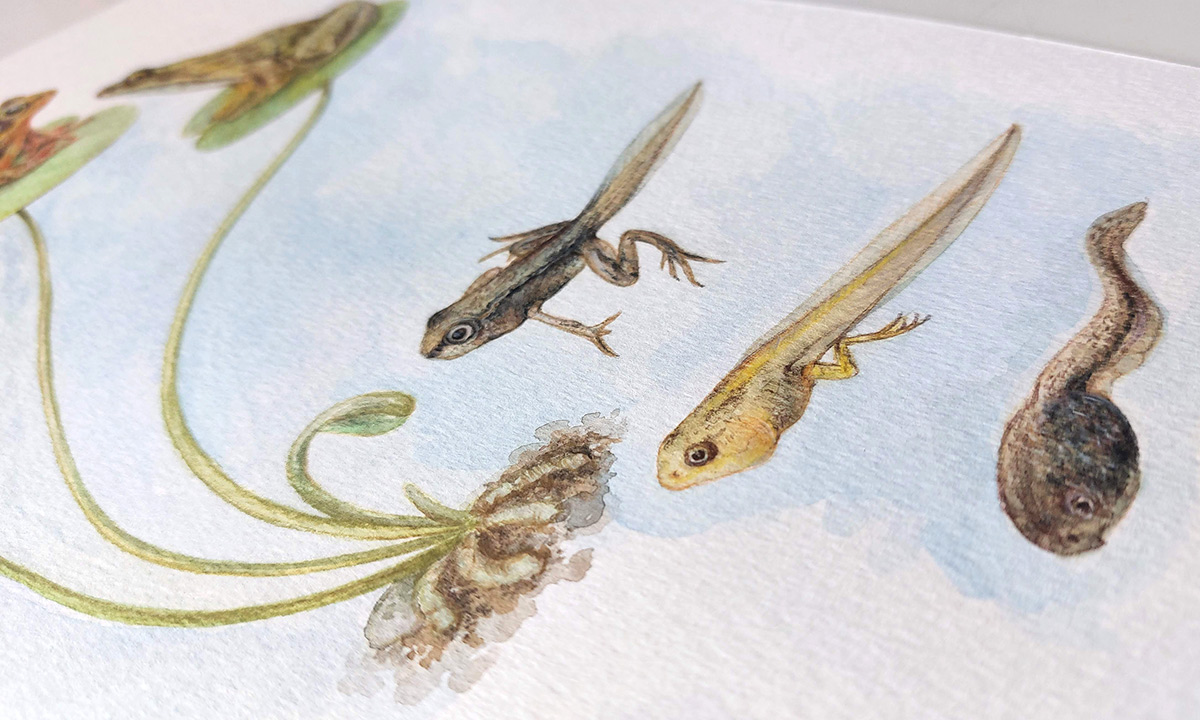
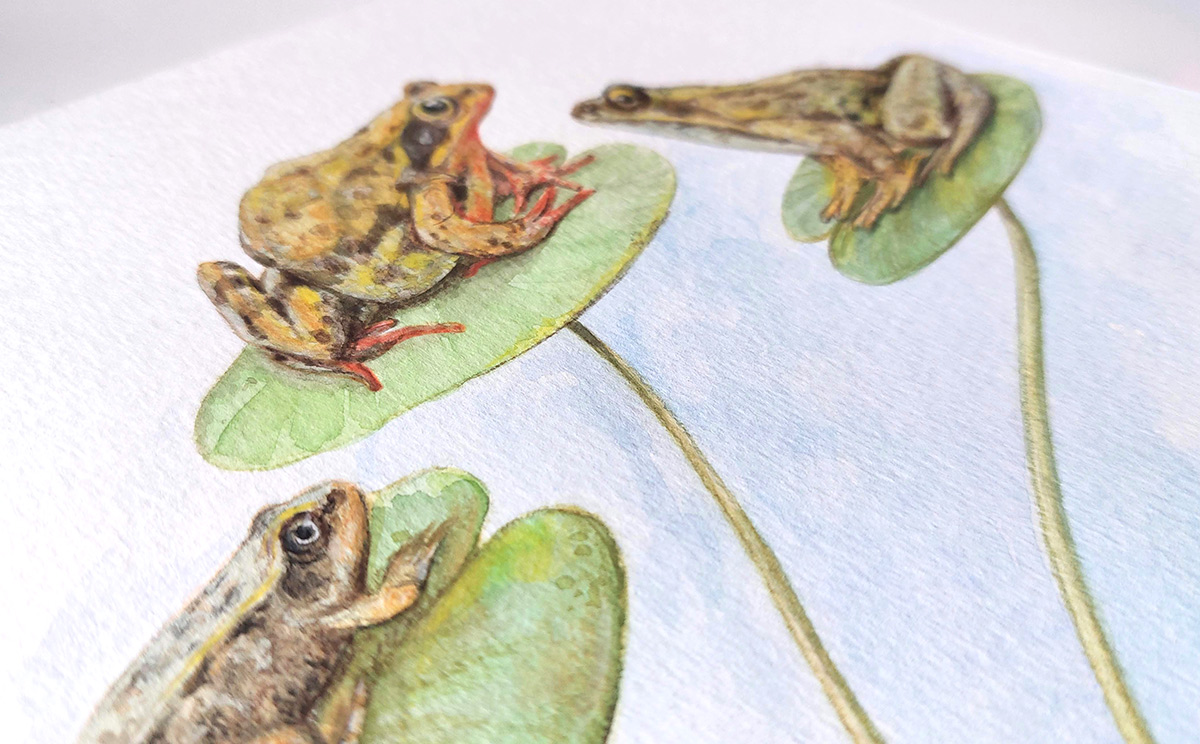
The first information board focuses on the life cycles of the common frog and smooth newt. The illustrations show the different stages of their development, helping visitors understand the remarkable transformation that takes place between eggs, larvae and adult amphibians.
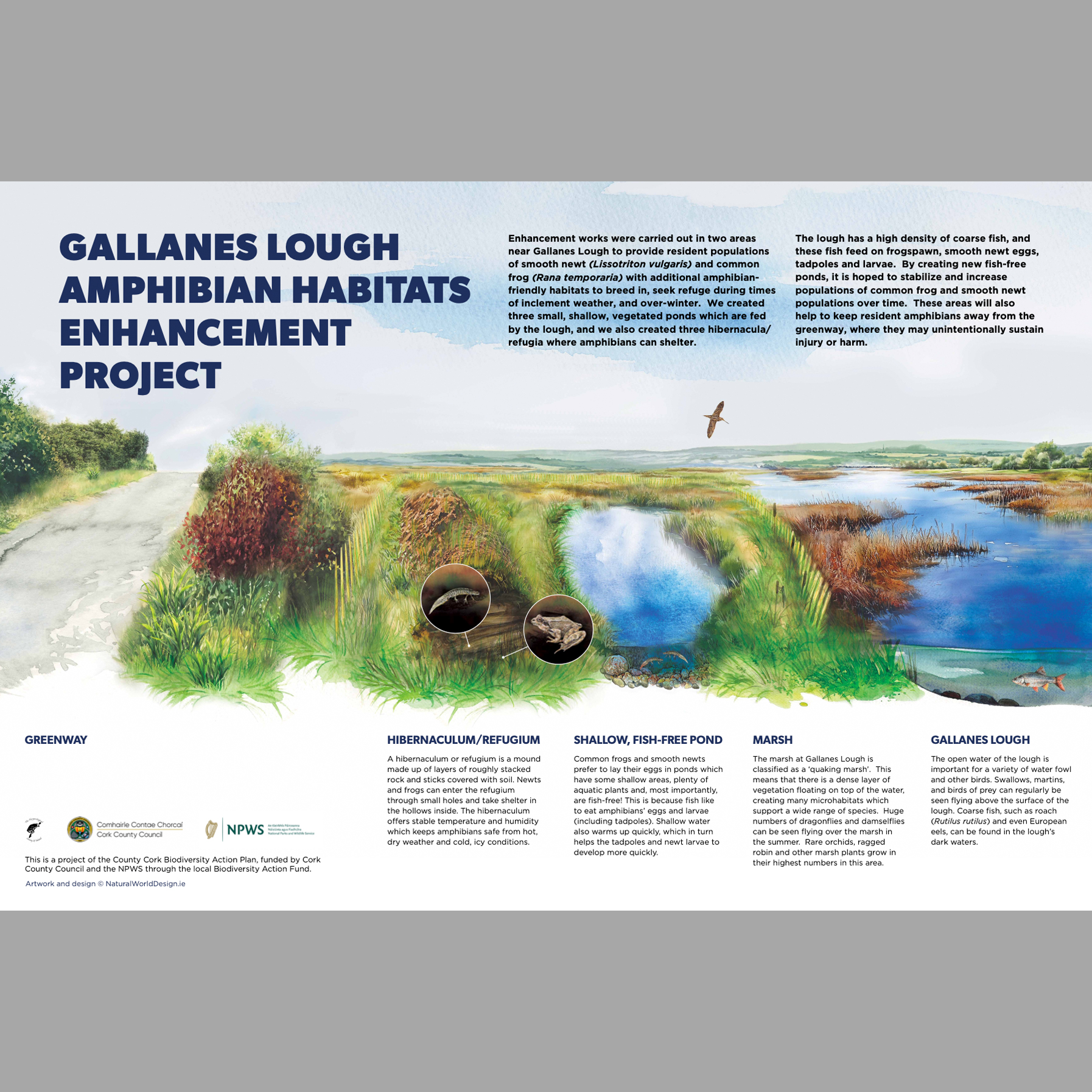
The second board explains the thinking behind the habitat enhancement project, connecting the restoration work at Gallanes Lough with the needs of the amphibians that depend on these wetland habitats.
Wildlife illustration as interpretation
Projects like this are an important part of my practice because they sit at the intersection of natural-history illustration, graphic design and environmental communication.
Scientific and conservation information can sometimes feel inaccessible to people who are unfamiliar with the subject. Illustration provides another way into that information. A carefully drawn animal can immediately communicate what a species looks like, while a visual sequence can explain a life cycle or ecological process far more intuitively than text alone.
There is also something particularly satisfying about creating artwork for a specific place. These boards are not generic wildlife graphics: they relate directly to Gallanes Lough, its amphibians and the conservation work taking place there. The illustrations therefore become part of the landscape's interpretation.
This approach builds on my wider experience creating biodiversity publications, educational resources, interpretation boards and wildlife murals. Across these formats, my aim is the same: to make information about nature accurate, engaging, and visually memorable.
I also enjoy the challenge of balancing scientific accuracy with accessible design. The finished boards need to communicate essential information clearly to someone walking through the landscape, while still rewarding visitors who want to stop and look more closely.
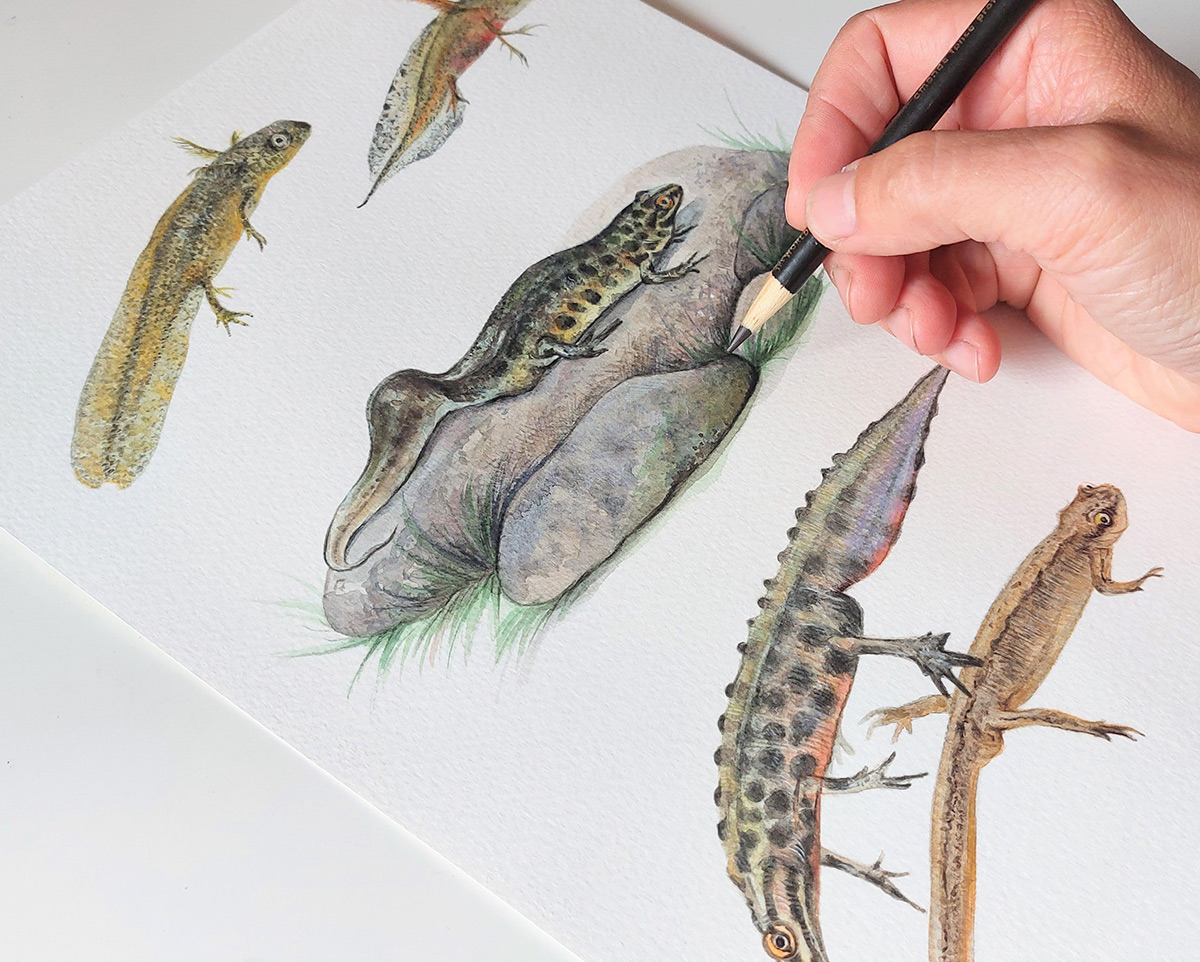
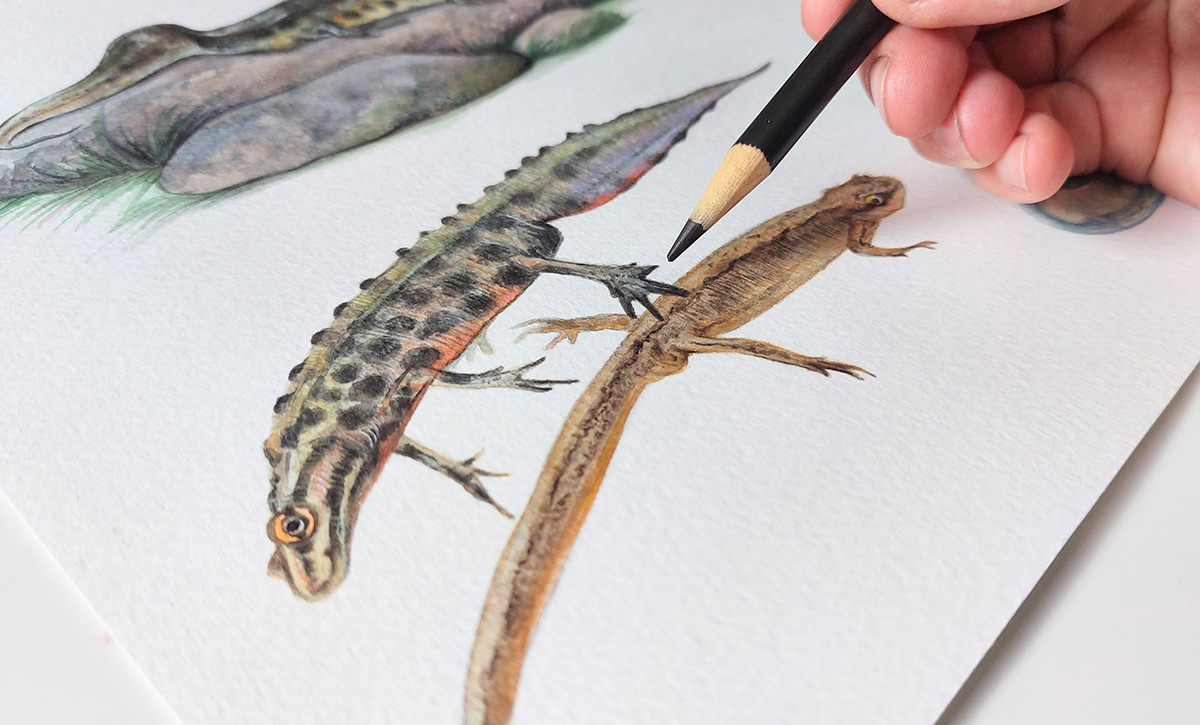
The photographs and video below show the development of the illustrations and the creative process behind the finished information boards.
I’m always interested in projects where wildlife illustration can help communicate a conservation message, interpret a landscape, or bring local biodiversity to life. If you are developing an interpretation board, biodiversity project, educational resource or conservation publication, get in touch to discuss a project.