
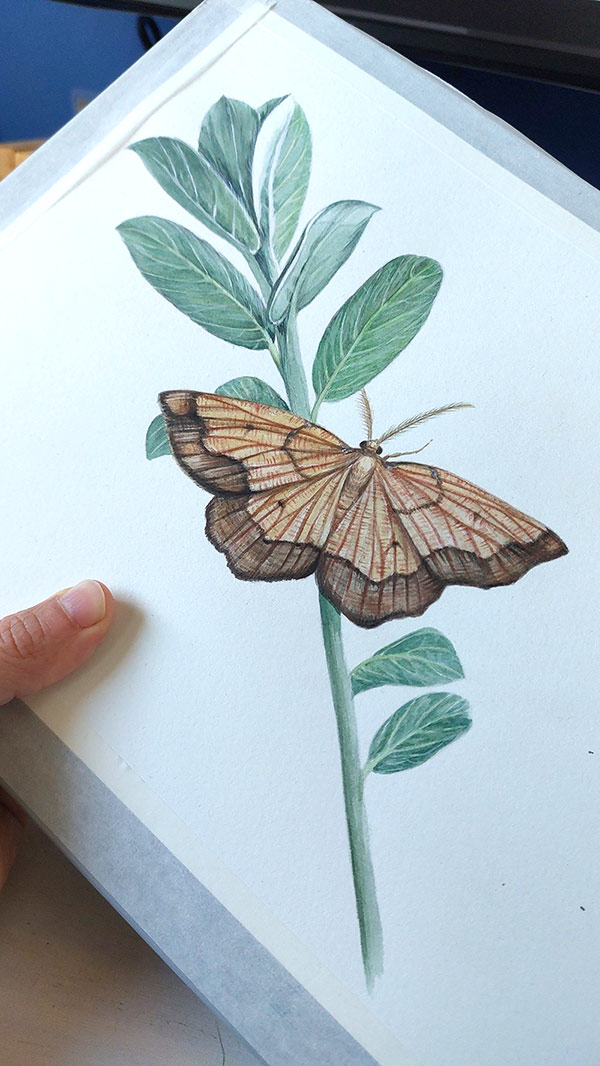
One species, so many different names, depending on the language. I sometimes wonder why we don’t literally translate the scientific (Latin) names of species – wouldn’t their recognition across languages be much easier?
In case of the bordered beauty moth you can see here, its Latin name – Epione repandaria – literally means "the bent-back/uneven one", likely referencing the distinctively wavy, jagged, or bent appearance of the broad, dark brown border on the wings of the moth.
In Polish, it’s called “nagodnik wycinek”; it’s such a weird name, I can’t even translate it to English! I have no clue what the word “nagodnik” means, and I’m a native Polish speaker.
In Italian, the moth does not have a single widely used common name – it is recognised by its scientific name.
In German, the moth’s common name is Weiden-Saumbandspanner, which literally means “willow border-band span-moth”
In Spanish, Epione repandaria is commonly referred to as “polilla repandaria”, with “polilla” meaning “moth”; a nice compromise, I think!
What are your thoughts about this? Do you know any animal names that sound weird in your native language, compared to another language you speak?
/
🎨 Bordered beauty moth (Epione repandaria), part of a large commission I’ve been working on this month.