
The Eurasian curlew (Numenius arquata), is a large wading bird that can be found in a wide range of habitats, from coastal areas to upland moors and even farmland. They are most commonly seen in Europe, but can also be found in parts of Asia and Africa. They are part of the family Scolopacidae, which includes sandpipers, godwits, and other wading birds.
If you'd like to buy a drawing of a particular species from me, but you don't see it in my shop, please ask if I have it.
I have dozens of drawings in my filing cabinet, most of them are part of various large commissions
(I usually draw species separately and combine them on my computer when designing the final artwork, together with the text, if required),
so there's always a chance I might have exactly what you need :)
Blog
Mar 7, 2023

There is something incredibly calming about watching a seal resting on a rocky shore, its large eyes following the movement of the waves, before slipping quietly back into the sea.
Dec 11, 2022

Some birds seem to belong to a particular season. For many people, the European robin (Erithacus rubecula) is the bird of winter: a small splash of warm colour appearing among bare branches, frosted gardens and quiet woodland paths.
Dec 2, 2022

In an age of smartphones, digital calendars and productivity apps, paper diaries continue to thrive. At first glance, it may seem surprising. After all, our phones can remind us about meetings, synchronise calendars across devices and store endless notes. Yet many people still choose a beautifully designed diary to organise their lives. Why? Because a diary is far more than a planning tool. It is something we interact with every day. It sits on our desk, travels in our bag, records our achievements, appointments, dreams and memories. Unlike a book, which we might read once, or a piece of artwork hanging on a wall, a diary becomes a companion for an entire year.
May 20, 2021

Today, on World Endangered Species Day, I'm delighted to introduce my wildlife children's book, Remarkable Creatures: A Guide to Some of Ireland's Disappearing Animals.
May 14, 2021
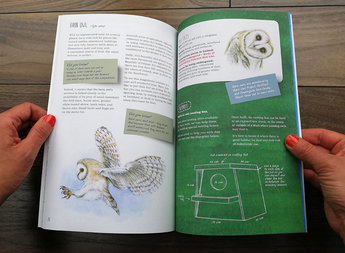
If someone asked you to name Ireland's most successful hunter, your first thought might be the fox, the peregrine falcon or perhaps even the otter. Surprisingly, one of the country's greatest predators spends most of its life hidden from view, gliding silently over fields after sunset. The barn owl is so quiet that many people never realise one has passed overhead. Yet this graceful bird performs one of the most valuable jobs in the Irish countryside. A single breeding pair can consume as many as 3,000 rodents every year, making them one of nature's most effective forms of pest control.